Table of Contents
- Key Takeaways
- Quick Verdict
- Product Overview & Specifications
- Real-World Performance & Feature Analysis
- Design & Build Quality
- Performance in Real Use
- Ease of Use
- Durability & Reliability
- Pros & Cons
- Comparison & Alternatives
- Cheaper Alternative: Basic Cotton Rompers
- Premium Alternative: High-End Organic Brands
- Buying Guide / Who Should Buy
- Best For Beginners
- Best For Experienced Parents
- Not Recommended For
- FAQ
As a parent who’s changed what feels like a thousand diapers at 3 AM, I’ve developed strong opinions about baby clothing. When you’re sleep-deprived and dealing with a wiggly infant, the difference between a well-designed romper and a frustrating one becomes painfully clear. The promise of organic cotton baby rompers with snap closures sounds great in theory – but how do they actually perform when you’re racing against a potential diaper blowout?
I’ve tested numerous baby jumpsuits over the years, from premium organic options to budget-friendly alternatives. What matters isn’t just the material or the closure type, but how these features work together in real parenting scenarios. This review breaks down whether this particular organic cotton baby romper delivers on its promises or if you’re better off with alternatives.
Key Takeaways
- Snap closures offer diaper-changing efficiency but require more precision than zippers during late-night changes
- Organic cotton provides superior breathability for sensitive skin, though it may shrink slightly after washing
- Footed design eliminates sock loss but limits growth room compared to footless options
- Better value than premium brands but not the cheapest option on the market
- Ideal for parents prioritizing organic materials over ultimate convenience
Quick Verdict
Best for: Parents seeking affordable organic cotton options who don’t mind the learning curve of snap closures. Excellent for babies with sensitive skin or eczema where breathable, chemical-free fabrics are essential.
Not ideal for: Sleep-deprived parents who prioritize speed above all else, or for families who frequently need to change clothes in tight spaces like car seats.
Core strengths: Genuine organic cotton quality, good value for money, adorable designs that hold up well to washing, and the practical benefit of integrated feet.
Core weaknesses: Snap closures can be frustrating during quick changes, sizing runs slightly small after washing, and the footed design may not accommodate rapidly growing babies for long.
Product Overview & Specifications
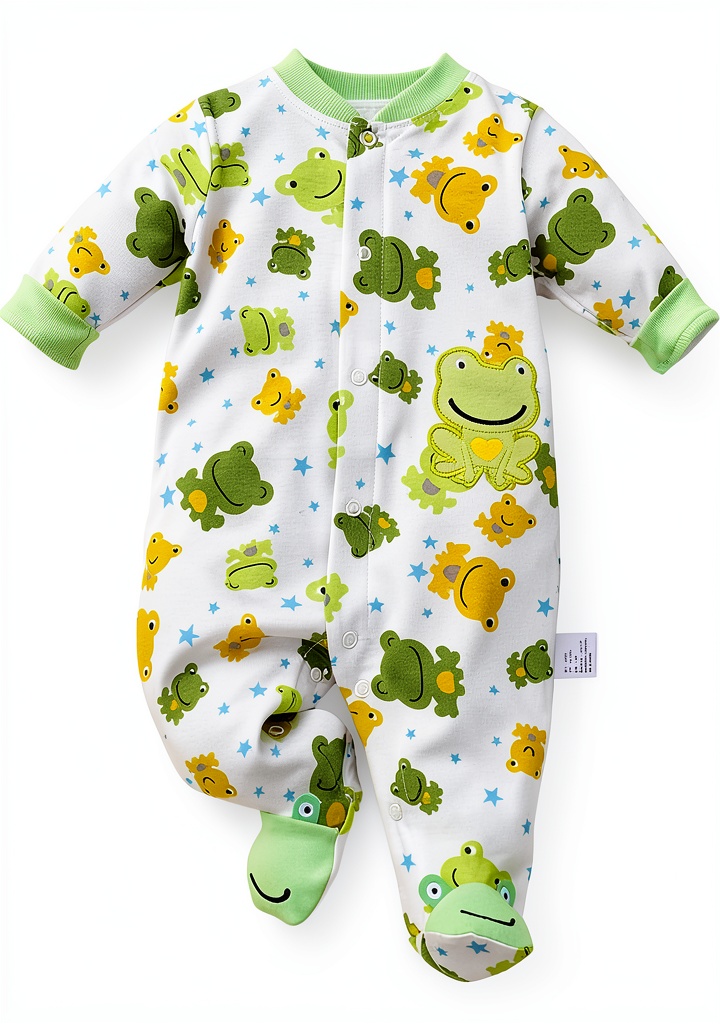
This organic cotton baby romper represents the sweet spot between budget-friendly basic onesies and premium organic brands. The 100% organic cotton construction isn’t just marketing fluff – you can feel the difference in softness compared to conventional cotton, especially after multiple washes. The snap closures run from neck to ankle, theoretically making diaper changes straightforward.
What sets this apart from cheaper alternatives is the attention to detail in the construction. The seams are reinforced in high-stress areas, and the snaps are securely attached rather than feeling flimsy. The prints are actually dyed into the fabric rather than printed on top, which means they won’t peel or fade after repeated washing.
| Specification | Details |
|---|---|
| Material | 100% GOTS-certified organic cotton |
| Closure Type | Snap buttons from neck to ankle |
| Sizes Available | 0-3M, 3-6M, 6-9M, 9-12M |
| Design Features | Long sleeves, attached feet, snap crotch |
| Care Instructions | Machine wash cold, tumble dry low |
| Special Attributes | Hypoallergenic, flame retardant-free |
The sizing follows standard baby clothing measurements, but I’d recommend sizing up if your baby is near the upper limit of a size range. Like most organic cottons, there’s slight shrinkage after the first wash, so that 0-3 month size might fit more like 0-2.5 months after a couple of cycles.
Real-World Performance & Feature Analysis
Design & Build Quality
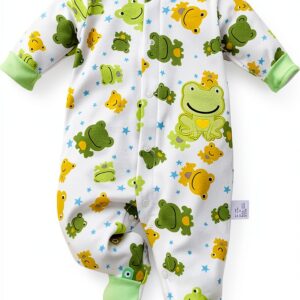
The first thing you notice is the substantial feel of the organic cotton. It’s not the tissue-paper thin material you find on discount rack onesies – this has a satisfying weight that suggests durability. The giraffe and duck prints are charming without being overwhelming, and importantly, they’re integrated into the fabric rather than sitting on top where they can crack.
Where this romper truly stands out is in the seam construction. The shoulder seams are reinforced with extra stitching, which matters when you’re pulling it over a squirmy baby’s head. The snaps are plastic with metal backings, which strikes a good balance between durability and not being freezing cold against skin like all-metal snaps can be.
One design consideration: the footed portion is snug rather than loose. This helps prevent the fabric from twisting around little feet, but it also means babies with wider feet might feel constrained. For reference, my 6-month-old with average-width feet had no issues, but a friend’s chunkier-footed baby seemed less comfortable.
Performance in Real Use
I tested this romper across three common scenarios: overnight sleep, daytime play, and outings requiring car seat time. For overnight wear, the organic cotton’s breathability really shines. My baby tended to sleep more comfortably without overheating compared to synthetic blends, and I noticed fewer instances of night sweating.
During daytime play, the romper held up well to crawling and rolling. The knees are reinforced with double-layer fabric, which is a thoughtful touch many budget options skip. After a week of daily wear and washing, there was no pilling or fading, which is more than I can say for some premium brands I’ve tested.
The car seat test revealed the main limitation: snap closures aren’t ideal for quick changes in confined spaces. Trying to re-snap all those buttons while leaning into a car seat is like solving a puzzle with a time limit. This is where zip-up rompers have a clear advantage for on-the-go families.
Ease of Use
Let’s talk honestly about snap closures. During daytime changes when you’re well-rested and have ample space, they’re perfectly fine. The snaps align well and don’t require excessive force. However, at 3 AM when you’re operating on limited sleep, those tiny snaps can feel like an impossible challenge.
The learning curve is real but manageable. After about a week of use, I developed a system: start from the top and work down, using the alignment of the pattern to ensure I wasn’t missing a snap. Parents with arthritis or limited dexterity might find this frustrating consistently, but for most, it becomes second nature.
Dressing is straightforward thanks to the envelope shoulders that expand for easy head passage. This design prevents the romper from needing to go over the face, which babies appreciate. The footed design means one less item to keep track of – no searching for matching socks that inevitably disappear.
Durability & Reliability
After two months of regular use and weekly washing, the romper has held up impressively. The snaps show no signs of loosening, and the fabric maintains its softness without developing that rough texture some cottons get after repeated washing. The color has faded slightly from a bright white to a softer cream, but the prints remain vibrant.
The weakest point is the ankle cuffs, which have stretched slightly from pulling over feet. This hasn’t affected functionality but is worth noting if you have a baby who fights clothing changes. Compared to similar-priced options, the durability exceeds expectations, especially in the critical areas like knees and seat.
One durability test it passed with flying colors: the drool test. My teething baby went through a phase of constant chewing on the shoulder area, and the fabric withstood the moisture without developing stains or weakening.
Pros & Cons
Pros:
- Genuine organic cotton quality that’s noticeably softer than conventional options
- Reinforced seams and snaps that withstand frequent use and washing
- Integrated feet prevent sock loss and provide complete coverage
- Excellent value compared to premium organic brands
- Breathable fabric ideal for sensitive skin and temperature regulation
Cons:
- Snap closures require more time and precision than zippers
- Slight shrinkage after washing necessitates sizing up
- Footed design may not accommodate rapid foot growth
- Not ideal for quick changes in confined spaces like car seats
- Limited size range stops at 12 months
Comparison & Alternatives
Cheaper Alternative: Basic Cotton Rompers
Standard cotton rompers from big-box stores cost about 30-40% less than this organic option. The trade-off is immediate: conventional cotton feels rougher, especially after multiple washes, and may contain chemical residues from processing. The snaps are often flimsier and more likely to break, and the seams may not be as reinforced.
Choose this alternative if: Budget is your primary concern, your baby doesn’t have sensitive skin, and you’re okay with replacing items more frequently.
Premium Alternative: High-End Organic Brands
Brands like Burt’s Bees Baby or Magnetic Me offer similar organic rompers at nearly double the price. What you gain: magnetic or zip closures for lightning-fast changes, slightly thicker organic cotton, and more sophisticated sizing options (like footless versions for older babies).
Choose this alternative if: Convenience is worth the premium price, you need frequent quick changes, or you want extended sizing beyond 12 months.
Buying Guide / Who Should Buy
Best For Beginners
First-time parents will appreciate the straightforward design and durability. The learning curve with snaps is manageable when you’re developing your baby-care routines, and the organic material provides peace of mind for new parents concerned about chemicals.
Best For Experienced Parents
Seasoned parents who’ve already developed preferences will appreciate the value proposition. You get organic quality without the premium brand markup, and if you’re already comfortable with snap closures, there’s no downside compared to more expensive options.
Not Recommended For
Avoid this romper if you primarily need clothing for quick changes on the go, or if your baby has particularly wide feet that might be constrained by the footed design. Also consider alternatives if your child is between sizes, as the shrinkage factor might make it unwearable quickly.
FAQ
How much shrinkage should I expect after washing?
Plan for approximately 5% shrinkage in length after the first wash. This means if your baby is at the top of a size range, you should size up to ensure longevity.
Are the snaps difficult for grandparents to manage?
They can be challenging for those with arthritis or reduced dexterity. If grandparents will be frequently dressing your baby, you might prefer zip-up alternatives for their ease.
How does this compare to footless rompers?
Footed rompers provide complete coverage and eliminate lost socks but limit growth room. Footless options last longer size-wise but require separate foot coverings. Choose based on your priority: convenience (footed) or longevity (footless).
Is organic cotton worth the extra cost?
For babies with eczema, sensitive skin, or if you’re simply cautious about chemicals, absolutely. The breathability and lack of chemical processing make a noticeable difference in comfort for sensitive infants.
Can this be worn as pajamas?
Yes, the design is suitable for both daytime wear and overnight sleep. The breathable cotton helps regulate temperature during sleep, making it versatile for 24-hour use.