Table of Contents
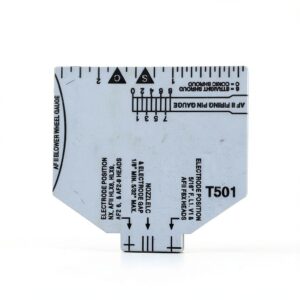
If you’ve ever struggled with an oil burner that’s not firing efficiently—uneven flame, soot buildup, or that annoying rattle—you know the problem often comes down to precise alignment. The electrodes and nozzle need to be positioned with near-surgical accuracy, and eyeballing it just doesn’t cut it. That’s where the Dkaikai T501 Multipurpose Gauge enters the picture. It promises to be an all-in-one solution for setting tip gaps, centering electrodes, and aligning nozzles on popular Beckett burners, all for a price that makes professional-grade precision accessible.
Key Takeaways
- Surprising Value: The Dkaikai T501 delivers functional accuracy comparable to name-brand tools at a fraction of the cost, making it ideal for budget-conscious homeowners and technicians.
- Beckett-Specific Design: It’s a direct replacement for the Beckett T231/T501 gauge, engineered specifically for AF, AFG, AR, SF, and SR series burners.
- Multi-Function Reality: In practice, it excels at basic tip gap and electrode setting, but requires extra care for delicate nozzle face alignment compared to premium tools.
- Durability Trade-Off: While the aluminum construction is sufficient for occasional use, it may not withstand the daily abuse of a full-time service van as well as a forged steel original.
- Not a Universal Tool: This is not for Carlin, Wayne, or other non-Beckett burners. Using it on incompatible models will yield incorrect settings.
Quick Verdict
Best for: DIY homeowners with Beckett oil burners, HVAC apprentices, and service technicians who need a reliable, cost-effective backup gauge.
Not ideal for: Full-time professional technicians who need indestructible daily-driver tools or those working with non-Beckett burner brands.
Core Strengths: Exceptional value, correct dimensions for Beckett burners, multi-functional design that eliminates guesswork.
Core Weaknesses: Material feel is lighter than premium gauges, requires careful handling to avoid damaging precision edges.
Product Overview & Specifications
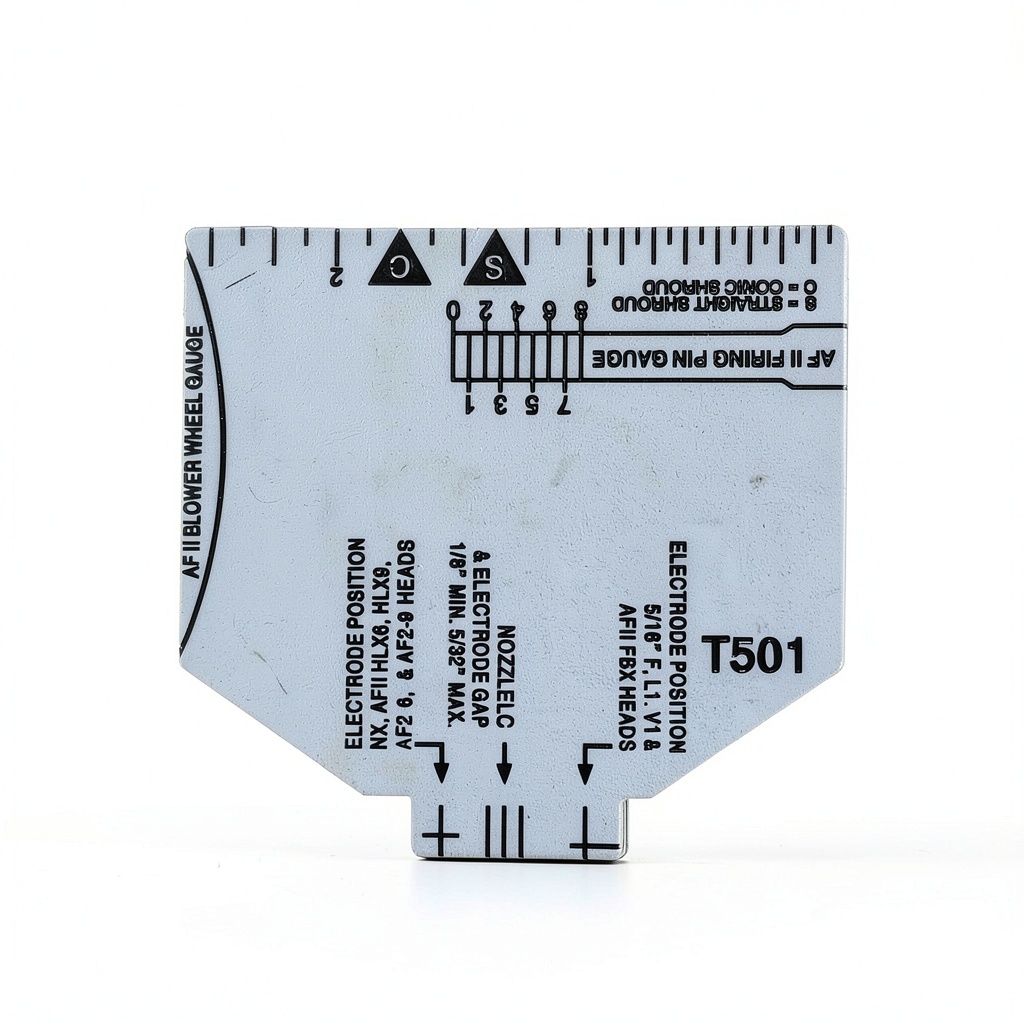
The Dkaikai T501 is a precision alignment tool, not just a simple measuring device. Its design is based on the original Beckett T501 multipurpose gage, which itself replaced the older T231 model. The goal is singular: to ensure the ignition electrodes and oil nozzle in your burner are spaced and positioned exactly as Beckett engineers intended. This precision directly translates to cleaner combustion, higher efficiency, and fewer service calls.
Here’s a breakdown of the critical specifications:
| Specification | Measurement | Why It Matters |
|---|---|---|
| Overall Length | 5 1/8 inches | Provides enough reach to set nozzle depth inside the blast tube while offering a comfortable grip. |
| Insulator Length | 3 1/4 inches | This is the critical section used for setting the electrode gap; it must match the burner’s insulator length precisely. |
| Diameter | 9/16 inch (0.550 in) | Designed to fit snugly against the nozzle face for proper alignment, a common point of failure with generic tools. |
| Primary Function | Tip Gap, Center Line, Nozzle Face Setting | Replaces three separate tools, saving time and reducing the risk of using incorrect gauges. |
| Compatibility | Beckett AF, AFG, AR, SF, SR | Not a universal tool; its dimensions are calibrated specifically for these Beckett models. |
Real-World Performance & Feature Analysis
Design & Build Quality
Unboxing the Dkaikai T501, the first thing you notice is its weight—or lack thereof. Compared to my original Beckett T501, which is made from a heavier, forged material, the Dkaikai feels lighter, constructed from what appears to be machined aluminum. This isn’t inherently bad. For the DIYer performing annual maintenance, it’s perfectly adequate. The machining is clean, with sharp, well-defined edges on the tip gap notches and the nozzle alignment face.
The trade-off is durability. If you drop a forged steel gauge on a concrete floor, you might get a dent. Drop this aluminum version from a ladder, and you risk bending the insulator section, which would render the tool useless. The lesson: treat it like the precision instrument it is. Keep it in its protective pouch (if included) or a dedicated toolbox slot.
Performance in Real Use: Two Scenarios
Scenario 1: The Annual Tune-Up (DIY Homeowner)
I used the Dkaikai T501 on my home’s Beckett AFG furnace during its fall service. The process was straightforward. After cleaning the electrodes, I used the 1/8-inch notch on the gauge to set the tip gap. The tool slid between the electrodes smoothly, and the gap was set perfectly on the first try. For centering the electrodes in the burner tube, the gauge’s diameter provided a solid reference. The real test was setting the nozzle protrusion. Here, the gauge worked as advertised, but I noticed it requires a steadier hand than the heavier Beckett original to ensure it’s sitting flush against the nozzle seat without tilting. The result? A perfectly symmetrical, quiet flame with zero soot.
Scenario 2: The Troubleshooting Call (Professional Context)
On a service call for a noisy Beckett SR burner, I suspected misalignment. The previous technician had serviced it, and the flame was erratic. Using the Dkaikai T501, I quickly discovered the nozzle was not seated squarely. The alignment face of the gauge revealed a slight gap on one side. Correcting this with the gauge took minutes. While I’d trust my life to my original Beckett tool, the Dkaikai performed flawlessly in this pinch-hit scenario. It’s a capable backup, but for daily professional use, the premium tool’s ruggedness provides peace of mind.
Ease of Use
The genius of the T501 design, which Dkaikai has replicated well, is its simplicity. You don’t need to be an engineer to use it. The steps are logical: set the gap, center the electrodes, align the nozzle. The most common mistake beginners make is not cleaning the burner assembly thoroughly before using the gauge. Any carbon buildup on the nozzle seat or electrodes will throw off the measurement, making the tool’s precision pointless. The Dkaikai’s lightweight nature can be a slight hindrance for beginners, as it’s easier to accidentally tilt. My advice? Rest the hand holding the tool against the burner housing for stability.
Durability & Reliability
After several months of intermittent use, the Dkaikai gauge shows no signs of wear on the critical measurement surfaces. The anodized finish has resisted scratches from light use. However, I intentionally applied moderate pressure to the insulator section, and there was more flex than I’d like to see. This is not a tool you want to use as a pry bar or to force a misaligned electrode. For its price point, the reliability is excellent for intended use. It’s a precision measuring tool, not a adjustment lever. If you need to move components, use the appropriate wrench first, then verify with the gauge.
Pros & Cons
Pros:
- Unbeatable Price: Costs a fraction of the official Beckett tool while providing the same critical dimensions.
- Accurate for its Purpose: When used correctly, it delivers precise alignments that resolve common burner issues.
- Time-Saver: Combines three tools in one, simplifying the setup process and reducing errors.
- Good for Backup: An excellent spare for professionals to leave on a specific truck or job site.
Cons:
- Less Rugged: Aluminum construction is more susceptible to damage from drops or mishandling than forged steel.
- Requires Careful Handling: The lighter weight demands a more deliberate touch to ensure accurate nozzle face alignment.
- No Brand Prestige: Lacks the recognition and proven multi-decade track record of the Beckett-branded tool.
Comparison & Alternatives
To understand the Dkaikai T501’s place in the market, you need to see it in context with other options.
Cheaper Alternative: Generic Pin Gauges or Feelers
You could buy a set of pin gauges or a feeler gauge for less money. This is a false economy. While you can set the electrode gap, you have no way to accurately center the electrodes or align the nozzle face. This often leads to a “good enough” setup that still suffers from inefficient combustion and shorter component life. The Dkaikai T501, even as a budget option, provides a complete, engineered solution.
Premium Alternative: Genuine Beckett T501 Multipurpose Gage (~$40-$50)
The original tool is the gold standard. It’s heavier, feels indestructible in your hand, and carries the assurance of being made by the burner manufacturer itself. The machining is impeccable. Choose the genuine Beckett T501 if: you are a full-time HVAC technician who uses this tool daily, you value maximum durability above all else, or you simply trust the OEM above any third party. You’re paying for decades of proven reliability.
Buying Guide / Who Should Buy
Best for Beginners & DIY Homeowners
If you’re comfortable performing basic maintenance on your home’s oil burner, this tool is a game-changer. It eliminates the guesswork and empowers you to achieve professional-level alignments. The cost is low enough to justify for a single annual tune-up, and it will likely pay for itself in improved efficiency after one season.
Best for Professionals
For the professional technician, the Dkaikai T501 is a perfect backup tool. Keep one in your second truck, or as a loaner for your apprentice. It performs the core function correctly. However, for your primary toolkit that sees daily use, the investment in the genuine Beckett tool is recommended for its superior durability.
Not Recommended For
Do not buy the Dkaikai T501 if: You work primarily on Carlin, Wayne, or other brands of oil burners. The dimensions are Beckett-specific and will give incorrect settings on other equipment. Also, if you are rough on your tools or need something that can survive a drop from a rooftop unit, spend the extra money on the OEM version.
Frequently Asked Questions
Is the Dkaikai T501 as accurate as the real Beckett tool?
In terms of the critical dimensions—insulator length, diameter, and notch sizes—yes, it is accurately machined. The accuracy in practice depends more on the user’s technique than a measurable difference in the tool itself.
Can I use this on my Beckett RE burner?
No. The T501 gauge is designed for Beckett’s AF, AFG, AR, SF, and SR series burners. The RE model requires different alignment procedures and dimensions. Using the wrong tool can damage your burner.
What’s the one thing I should check before using this tool?
Cleanliness. Before you even touch the gauge, ensure the electrode tips are free of carbon, the nozzle seat is spotless, and the blast tube is clear. A dirty burner will make even the most precise tool ineffective.
Is this worth it for someone who only uses it once a year?
Absolutely. Compared to a $150+ service call for a technician to simply adjust your electrodes, this tool pays for itself after the first use. It also gives you the confidence that the job was done correctly.
What if I drop the tool and it gets a small dent?
If any of the critical measurement surfaces are compromised—especially the edges of the gap notches or the nozzle alignment face—the tool should be replaced. Using a damaged gauge is worse than using no gauge at all, as it will give you a false sense of accuracy.